• Skip to main content

College Hill Pilates and Physical Therapy LLC

Pilates Classes in Cincinnati

(513) 445-WELL (9355)
  • Home
  • Physical Therapy
    • Telehealth PT
  • Pilates
    • Pilates Mat Classes
    • Virtual Pilates Classes
  • Strength Training
  • Yoga
  • Tai Chi
  • Blog
  • Schedule

Blog

Apr 25 2025

Why Does My Hip Hurt? Part 2: Groin Pain

Welcome back to Part 2 of this blog series on hip pain! In Part 1, we explored lateral hip pain,
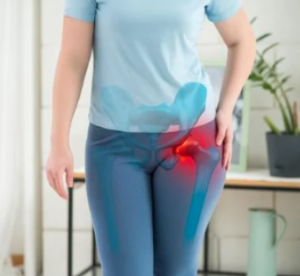
often tied to muscular issues. This time, we’ll focus on groin pain—felt in the crease between
the stomach and the upper thigh. Groin pain is commonly associated with hip joint problems
such as arthritis, hip impingement, or hip instability/dysplasia. Occasionally, it can radiate from
the upper lumbar spine or anterior hip muscles (like your adductors or hip flexors). While these
muscle-related causes are somewhat common, they’re less frequent than joint-related issues
and will be addressed in a future post.Groin pain
Hip Impingement

Hip impingement occurs when soft tissue gets compressed between the head of the femur and
the hip socket. This happens either due to excessive bone growth on the femoral head (a CAM
lesion) or when the hip socket/labrum covers too much of the femoral head, causing contact
with the tissue during hip flexion. Hip impingement is often seen in younger individuals,
particularly athletes.

Symptoms include anterior hip pain triggered by activities requiring deep hip flexion, such as
squatting, sitting on a low surface, or pulling the knees to the chest during stretching.

How is hip impingement managed?

We focus on improving joint mobility with manual therapies like hip joint manipulations and
self-mobilization techniques (check out our Instagram for ideas!). Next, we emphasize
strengthening exercises for the glutes and, depending on individual deficits, the hip flexors.
Abdominal strengthening is also crucial—it prevents excessive anterior pelvic tilt, which can
exacerbate impingement.

Hip Arthritis

Osteoarthritis of the hip is another common diagnosis, especially in individuals aged 55 and
older. Those with arthritis often experience pain and stiffness that's worse in the morning but
improves after 30–60 minutes of activity. However, pain tends to return with prolonged
activities like walking, gardening, or standing.

What’s the best approach for arthritis?

Manual joint mobilizations to reduce stiffness, combined with a global exercise program
focusing on functional movements—such as squats, step-ups, and lunges—can help maintain
mobility and delay the need for hip replacement as long as possible.

Hip Instability/Dysplasia

Unlike impingement, hip dysplasia occurs when the hip socket doesn’t adequately cover the
femoral head, leading to poor joint stabilization. Individuals often present with groin and lateral
hip pain and a sensation of tightness—not actual tightness, though.

Why the sensation of tightness?

Since the hip joint lacks proper stability, the surrounding muscles, especially anterior hip
muscles and hip flexors, work overtime to compensate. This overwork leads to fatigue and the
sensation of tightness.

What’s the solution for hip instability/dysplasia?
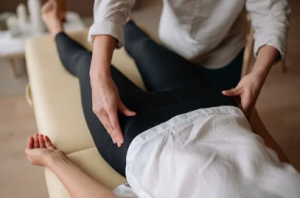
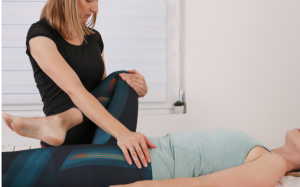
A therapist working with a patient's hips

Strengthening the hip flexors, glutes, and adductors is key. Building resilient muscles provides
stability to the hip joint without overloading the musculature. To enhance recovery and
tolerance for daily activities, exercises are paired with manual therapies like soft tissue
mobilization (rather than joint mobilization) and often dry needling. These treatments reduce
pain and alleviate the sensation of tightness, making exercises and day-to-day activities more
manageable.
Written by Joe Anneken, PT, DPT, OCS · Categorized: Exercise, Hip, Pain

Apr 15 2025

Why does My Hip Hurt? Part 1: Glute Pain

Hip pain is a common complaint we encounter daily in the clinic, often multiple times a day.
The two primary causes of hip pain are either joint pain or musculotendon pain. While pain
presentations can vary widely, here are the two most frequent patterns:

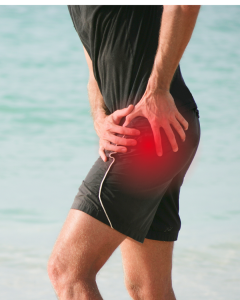
  • Person in athletic shorts holding their hip with redness at hip indicating pain.Back or side of the hip pain is often linked to muscular or tendon issues, such as gluteal

    Another potential cause of hip pain is piriformis syndrome. True piriformis syndrome occurs
    when the piriformis muscle presses on the sciatic nerve, causing hip pain and pain radiating
    down the back of the leg. However, current findings suggest that this scenario is relatively rare.
    More often, the pain is due to an irritated nerve in the low back, which leads to irritation in the
    hip musculature and leg pain. 

    pain (your “butt muscle”) or piriformis syndrome.

  • Groin pain, on the other hand, is more likely tied to hip joint issues.

This blog post will focus on glute pain. If you’re experiencing groin pain, check out Part 2 of this series!

Understanding Lateral Hip Pain

The general term for lateral hip pain is greater trochanteric pain syndrome (GTPS). This
umbrella term includes conditions like gluteal tendinopathy, hip bursitis, and IT band pain. Even
with advanced imaging like MRIs, pinpointing the exact source of pain can be challenging
because it often stems from multiple structures simultaneously.

Common triggers for GTPS and piriformis syndrome include:

  • Standing on the affected leg.
  • Going up or down stairs.
  • Sitting on hard surfaces.
  • Crossing the legs.
  • Lying on the affected side.

These activities place stress on the lateral hip’s muscles or bursa. The pain usually develops gradually from overuse, poor mechanics, or doing too much too soon. Although it’s less common, acute injuries, such as falling on the hip or sudden cutting or turning movements, can cause a strain in the area.

How Do We Address Greater Trochanteric Pain?

The first step is identifying why the pain is occurring. If there’s a specific injury event, such as a
fall or sports incident, the cause is straightforward. Acute injuries often heal with activity
modification and time. It’s best to consult a medical professional, such as a physical therapist,
athletic trainer, or physician, to rule out serious injuries. They’ll guide you on suitable exercisesTherapist examining a patient's hip.
and activity limitations as you recover.

For pain that has persisted for weeks, months, or even years, the root cause may not be
localized to the hip. This is where the concept of regional interdependence comes in—issues
elsewhere in the body, like core stability or endurance deficits, may be overloading the hip.
For example, if your core or hip muscles can’t adequately stabilize the hip during activities like
walking, stair climbing, or jumping, the hip muscles may be overstrained. Repeated stress on
the greater trochanter will eventually cause tissue breakdown and pain.

What’s the next step?

Your physical therapist will perform a thorough assessment of muscle strength, flexibility, and
stability. Based on the findings, you’ll collaborate on an exercise plan tailored to your goals,
along with activity modifications to allow your hip to recover while keeping you as active as
possible.

Written by Joe Anneken, PT, DPT, OCS · Categorized: Exercise, Hip, Pain

Dec 30 2024

Should I push through pain when working out?

Do I Need to Avoid Painful Exercises?

Pain is a complex subject. It’s our body’s way of telling us something is wrong, and we should Middle-aged man in gym bent over in back pain.
stop doing whatever we’re doing to avoid injury. This is beneficial in the short term, but what about pain that has been present for weeks, months, or even years? Should we always avoid painful activities?

Before we dive into whether to avoid painful exercises or not, if you think you are injured, talk to your physical therapist or physician; but in short, no, we probably don’t need to avoid all painful exercises, especially for chronic pains. Let’s take chronic low back pain for example. It’s not uncommon for people to tweak their back and continue to have low back pain for up to a year, sometimes longer! Standard tissue healing takes anywhere between 2-4 weeks for a mild strain, 4-16 weeks for moderate strain, and up to a year for a complete muscle tear (which is uncommon). So, if most heal in under 16 weeks, why do so many people continue to have pain well beyond that timeframe? I wish it was a simple answer, but unfortunately there are dozens of factors that come into play. The factors range from severity of injury, history of injury, underlying conditions, exercise programming, and even our own beliefs about the injury. There seems to have been a huge shift in the physical therapy management of chronic pain over the past 1-2 decades (and mostly for the better in my opinion). Physical therapists are taking psychosocial factors into account and tailoring rehab protocols around them. We are also seeing an increase in true strength training when individuals with chronic pain. It’s not just 2 sets of 10, hot packs, rest, and ultrasound anymore! Believe it or not, we’ve found complete rest is one of the worst things you can do for chronic pain.

We have a lot of research showing that exercising through pain is safe when done properly. This is where an experienced clinician comes into play, because knowing which pain is fine and which is not can be tricky. In general, lower levels (below 5/10 on the pain scale or no more than moderate pain) dull aching, and chronic pain is usually okay to train through. Some things to consider when training through pain are, “is this tolerable,” “does the pain return back to it’s original level after 24-48 hours,” and “is the pain going up or down week by week.” If you find yourself hitting 7-8/10 and feeling worse for 3 days after a workout then that’s a good sign you’re doing too much.

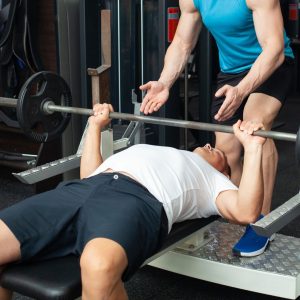
So, what would it look like if you came to our clinic experiencing pain during movement or exercise. The first thing we’ll do is a thorough physical exam. Determine what’s going on and if physical therapy is appropriate for you; and if not, we’ll get you where you need to be. Next, if deemed safe, I Man bench pressing in a gym with another man spotting. like to watch you perform the painful movement. This could be squatting, benching, overhead lifting/pressing, etc. Then we’ll perform some therapeutic modalities such as dry needling or perform some soft tissue mobilization, and then come up with some modifications to reduce pain during the exercise, determine an appropriate level of pain to work through (if needed), create a home exercise program, and a schedule to get you back to your prior level of exercise. We also like to work with any other health care worker or fitness professional you’re working with. This will allow us to communicate an individualized plan to keep you in the gym while you go through your rehab journey!

If you have any questions or want to find out if you need physical therapy, you can reach me at

Joe@collegehillpilatespt.com

Written by Joe Anneken, PT, DPT, OCS · Categorized: Back pain, Chronic pain, Exercise, Physical therapy, Workout

Nov 10 2024

Why Does My Back Hurt When I Swing a Golf Club?

Has low back pain ever kept you from golfing? Low back pain is a common occurrence in the world of golf. It’s a gameMan playing golf of repetitive high-speed twisting of the spine after all. While rotation of the spine has gotten a bad rap over the years, when done too much or with other underlying issues, back pain can rear its ugly head. To make things more difficult, the issue might be from something other than the back like the hips, shoulders, or the wrists. That’s why it’s so important to work with someone trained in evaluating golfers. This post is the introduction of series of posts highlighting some common causes of low back pain including certain swing characteristics such as reverse spine angle during the backswing, hip hiking during the downswing, flying elbows, and more.

What will the first visit look like? 

The first thing we’ll do is a full-body screen created by the Titleist Performance Institute. This will give a general sense of how you are moving and functioning from head to toe and then will home in on some areas of concern. Next, we’ll check your swing out so Golfer with his hand on his low backwe can determine what factors of the screen are leading to certain swing characteristics which may lead to low back pain. This will help decide if you need to see a medical professional to correct any physical faults or see a golf pro for some lessons. If PT is appropriate for you, we’ll begin with treatment on day one. Day one will include personalized exercises to address any deficits found in the screen along with some manual intervention such as spinal manipulations, soft tissue mobilization, or dry needling. These manual interventions will help reduce pain quickly to get you back to golf ASAP while we also work on strengthening and mobility to prevent the issue from returning in the future. We’ll also get you set up with a golf professional if needed.

What will future sessions look like? 

The end goal is to get you back to golf and, as mentioned earlier, prevent the pain from returning. Each session we’ll review how your symptoms have changed and how your golf game is going. We’ll quickly perform the physical screen from day one to see how mobility and strength have changed, perform any hands-on treatment, and continued progressing the exercises. While each plan of care is customized for you, during the initial visits you can expect some introductory strength training such as barbell and dumbbell work, Pilates, or body weight exercises depending on need and preference. Each session will last around 45 minutes to an hour and will start once per week and taper off as needed. Sometimes we have people come in once every few months for checkups and exercise progressions.

Summary

To summarize, low back pain can be detrimental and recurrent for golfers. It’s a complex condition that requires a trained individual to evaluate and assess. I use the tools provided by the Titleist Performance institute, my years of experience as a PT, and my own experience with pain on the golf course to help you get back to what you enjoy. I’ll provide hands on therapies such as spinal manipulation, soft tissue mobilization, and dry needling paired with an individualized exercise routine tailored to you and your preferences not only reducing pain but potentially improving your golf game!

Written by Joe Anneken, PT, DPT, OCS · Categorized: Back pain, Golf, Physical therapy

Oct 27 2024

Cervicogenic headache: Is my headache coming from my neck?

Woman in discomfort holding her head and neck.

Is my Headache coming from my neck?

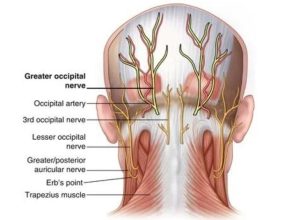
In short, yes, it’s certainly possible. Headaches that arise from issues at the neck are known as cervicogenic headaches. The most common structures that can trigger these types of headaches are the upper cervical spine or the musculature surrounding the neck such as the upper trapezius, levator scapula, and the small suboccipital muscles at the base of your skull. When these structures are irritated, overworked, or simply tight, they can irritate nearby nerves that innervate the face and head. This can lead to headaches in the head or behind the eye. Possibly both!

Anatomical illustration of the neck and head.


How do I tell if I have a cervicogenic headache?

Most of the time the headache will be on one side of the head and feel like it starts from the base of the skull and wraps around the top of the head to the side. We call this a ram’s horn pattern. Think of the design and location of the LA Rams football helmet but backwards. This is likely where the headache will be. Sometimes the headache will feel like it’s behind the eye too. The headaches will occur with certain head movements or positions, especially if you hold that position for a long time, like when you are sitting at your desk looking at a computer or reading a book in bed.

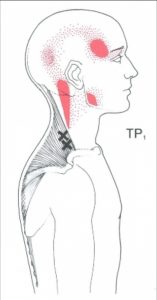
Illustration of cervical trigger points.

It’s important to differentiate a cervicogenic headache from other types of headaches like a migraine or a tension type headache. A migraine is a headache caused by blood flow problems to the brain. Migraines can present very similar, if not exactly like a cervicogenic headache. That’s why it is so common for a cervicogenic headache to be misdiagnosed as a migraine and vice versa. Key differences to look for are throbbing type pain, signs that a headache is coming on known as an aura, and other symptoms such as nausea, light sensitivity, and sensitivity to sound. These are all signs of a migraine that are not found with a cervicogenic headache. A Tension-type headache is another form of headache that arises from the musculature of the head. These will present on both sides of the head usually across the forehead and feel like a tight band is around your head. Tension type headaches don’t change with activity and can also present with light and sound sensitivity but usually not both.

Can physical therapy treat cervicogenic headaches?

Yes, it can! Physical therapy is a very effective form of treatment for cervicogenic headaches, and in my experience, it can be very quick. Depending on the source of the headache, either from the upper cervical spine or the surrounding musculature, treatment will likely include cervical spine manipulation/mobilization, soft tissue mobilization, and dry needling. These treatments will help get rid of the headache quickly, sometimes immediately. We then follow up with exercises for the neck and shoulder girdle. These will keep the muscles and spine flexible and strong, preventing future headaches.

What if my headache isn’t coming from my neck, can Physical Therapy Still Help?

That’s a harder question to answer. Unfortunately, physical therapy cannot help with a true migraine. As mentioned above, migraines are issues with blood flow to the brain. These are best treated with migraine medications. Luckily migraine medications are very effective. It is common, however, to have a residual headache despite the effectiveness of migraine medications. These residual headaches may be cervicogenic; and that we do treat!

Summary

Your headache very well could be coming from your neck. These are termed cervicogenic headaches. These headaches usually come from sustained neck positions or movements. They are usually one-sided, start at the back of the head and radiate to the front and side of the skull. Physical therapy is a great treatment for cervicogenic headaches. Treatment will likely include spinal manipulation, soft tissue mobilization, and dry needling combined with exercises for the neck and shoulder. Differentiating between other forms of headache such as migraines and tension-type headaches is important. So, the best course of action is to seek advice from a health professional such as a physical therapist or your medical doctor.

Schedule an appointment with one of our physical therapists for an assessment to see if physical therapy can help manage your headaches!

Written by Joe Anneken, PT, DPT, OCS · Categorized: Headache, Neck pain, Physical therapy

  • Page 1
  • Page 2
  • Page 3
  • Interim pages omitted …
  • Page 6
  • Go to Next Page »
College Hill Pilates and Physical Therapy LLC
5838 Hamilton Ave.
Cincinnati, OH 45224

Client Portal  •  Terms and Conditions of Use

© 2026 College Hill Pilates and Physical Therapy LLC. All rights reserved.