• Skip to main content

College Hill Pilates and Physical Therapy LLC

Pilates Classes in Cincinnati

(513) 445-WELL (9355)
  • Home
  • Physical Therapy
    • Telehealth PT
  • Pilates
    • Pilates Mat Classes
    • Virtual Pilates Classes
  • Strength Training
  • Yoga
  • Tai Chi
  • Blog
  • Schedule

Hip

Apr 25 2025

Why Does My Hip Hurt? Part 2: Groin Pain

Welcome back to Part 2 of this blog series on hip pain! In Part 1, we explored lateral hip pain,
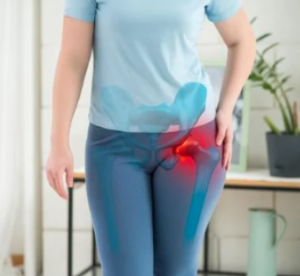
often tied to muscular issues. This time, we’ll focus on groin pain—felt in the crease between
the stomach and the upper thigh. Groin pain is commonly associated with hip joint problems
such as arthritis, hip impingement, or hip instability/dysplasia. Occasionally, it can radiate from
the upper lumbar spine or anterior hip muscles (like your adductors or hip flexors). While these
muscle-related causes are somewhat common, they’re less frequent than joint-related issues
and will be addressed in a future post.Groin pain
Hip Impingement

Hip impingement occurs when soft tissue gets compressed between the head of the femur and
the hip socket. This happens either due to excessive bone growth on the femoral head (a CAM
lesion) or when the hip socket/labrum covers too much of the femoral head, causing contact
with the tissue during hip flexion. Hip impingement is often seen in younger individuals,
particularly athletes.

Symptoms include anterior hip pain triggered by activities requiring deep hip flexion, such as
squatting, sitting on a low surface, or pulling the knees to the chest during stretching.

How is hip impingement managed?

We focus on improving joint mobility with manual therapies like hip joint manipulations and
self-mobilization techniques (check out our Instagram for ideas!). Next, we emphasize
strengthening exercises for the glutes and, depending on individual deficits, the hip flexors.
Abdominal strengthening is also crucial—it prevents excessive anterior pelvic tilt, which can
exacerbate impingement.

Hip Arthritis

Osteoarthritis of the hip is another common diagnosis, especially in individuals aged 55 and
older. Those with arthritis often experience pain and stiffness that's worse in the morning but
improves after 30–60 minutes of activity. However, pain tends to return with prolonged
activities like walking, gardening, or standing.

What’s the best approach for arthritis?

Manual joint mobilizations to reduce stiffness, combined with a global exercise program
focusing on functional movements—such as squats, step-ups, and lunges—can help maintain
mobility and delay the need for hip replacement as long as possible.

Hip Instability/Dysplasia

Unlike impingement, hip dysplasia occurs when the hip socket doesn’t adequately cover the
femoral head, leading to poor joint stabilization. Individuals often present with groin and lateral
hip pain and a sensation of tightness—not actual tightness, though.

Why the sensation of tightness?

Since the hip joint lacks proper stability, the surrounding muscles, especially anterior hip
muscles and hip flexors, work overtime to compensate. This overwork leads to fatigue and the
sensation of tightness.

What’s the solution for hip instability/dysplasia?
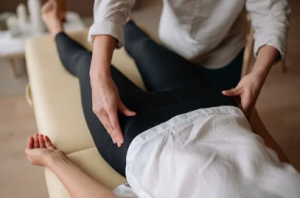
A therapist working with a patient's hips

Strengthening the hip flexors, glutes, and adductors is key. Building resilient muscles provides
stability to the hip joint without overloading the musculature. To enhance recovery and
tolerance for daily activities, exercises are paired with manual therapies like soft tissue
mobilization (rather than joint mobilization) and often dry needling. These treatments reduce
pain and alleviate the sensation of tightness, making exercises and day-to-day activities more
manageable.
Written by Joe Anneken, PT, DPT, OCS · Categorized: Exercise, Hip, Pain

Apr 15 2025

Why does My Hip Hurt? Part 1: Glute Pain

Hip pain is a common complaint we encounter daily in the clinic, often multiple times a day.
The two primary causes of hip pain are either joint pain or musculotendon pain. While pain
presentations can vary widely, here are the two most frequent patterns:

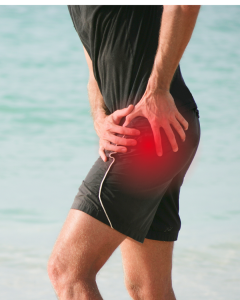
  • Person in athletic shorts holding their hip with redness at hip indicating pain.Back or side of the hip pain is often linked to muscular or tendon issues, such as gluteal
    Another potential cause of hip pain is piriformis syndrome. True piriformis syndrome occurs
    when the piriformis muscle presses on the sciatic nerve, causing hip pain and pain radiating
    down the back of the leg. However, current findings suggest that this scenario is relatively rare.
    More often, the pain is due to an irritated nerve in the low back, which leads to irritation in the
    hip musculature and leg pain. 

    pain (your “butt muscle”) or piriformis syndrome.

  • Groin pain, on the other hand, is more likely tied to hip joint issues.

This blog post will focus on glute pain. If you’re experiencing groin pain, check out Part 2 of this series!

Understanding Lateral Hip Pain

The general term for lateral hip pain is greater trochanteric pain syndrome (GTPS). This
umbrella term includes conditions like gluteal tendinopathy, hip bursitis, and IT band pain. Even
with advanced imaging like MRIs, pinpointing the exact source of pain can be challenging
because it often stems from multiple structures simultaneously.

Common triggers for GTPS and piriformis syndrome include:

  • Standing on the affected leg.
  • Going up or down stairs.
  • Sitting on hard surfaces.
  • Crossing the legs.
  • Lying on the affected side.

These activities place stress on the lateral hip’s muscles or bursa. The pain usually develops gradually from overuse, poor mechanics, or doing too much too soon. Although it’s less common, acute injuries, such as falling on the hip or sudden cutting or turning movements, can cause a strain in the area.

How Do We Address Greater Trochanteric Pain?

The first step is identifying why the pain is occurring. If there’s a specific injury event, such as a
fall or sports incident, the cause is straightforward. Acute injuries often heal with activity
modification and time. It’s best to consult a medical professional, such as a physical therapist,
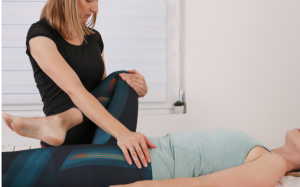
athletic trainer, or physician, to rule out serious injuries. They’ll guide you on suitable exercisesTherapist examining a patient's hip.
and activity limitations as you recover.

For pain that has persisted for weeks, months, or even years, the root cause may not be
localized to the hip. This is where the concept of regional interdependence comes in—issues
elsewhere in the body, like core stability or endurance deficits, may be overloading the hip.
For example, if your core or hip muscles can’t adequately stabilize the hip during activities like
walking, stair climbing, or jumping, the hip muscles may be overstrained. Repeated stress on
the greater trochanter will eventually cause tissue breakdown and pain.

What’s the next step?

Your physical therapist will perform a thorough assessment of muscle strength, flexibility, and
stability. Based on the findings, you’ll collaborate on an exercise plan tailored to your goals,
along with activity modifications to allow your hip to recover while keeping you as active as
possible.

Written by Joe Anneken, PT, DPT, OCS · Categorized: Exercise, Hip, Pain

College Hill Pilates and Physical Therapy LLC
5838 Hamilton Ave.
Cincinnati, OH 45224

Client Portal  •  Terms and Conditions of Use

© 2026 College Hill Pilates and Physical Therapy LLC. All rights reserved.